Salt intrusion into estuaries and tidal rivers is a growing global concern, affecting and threatening freshwater supplies worldwide:
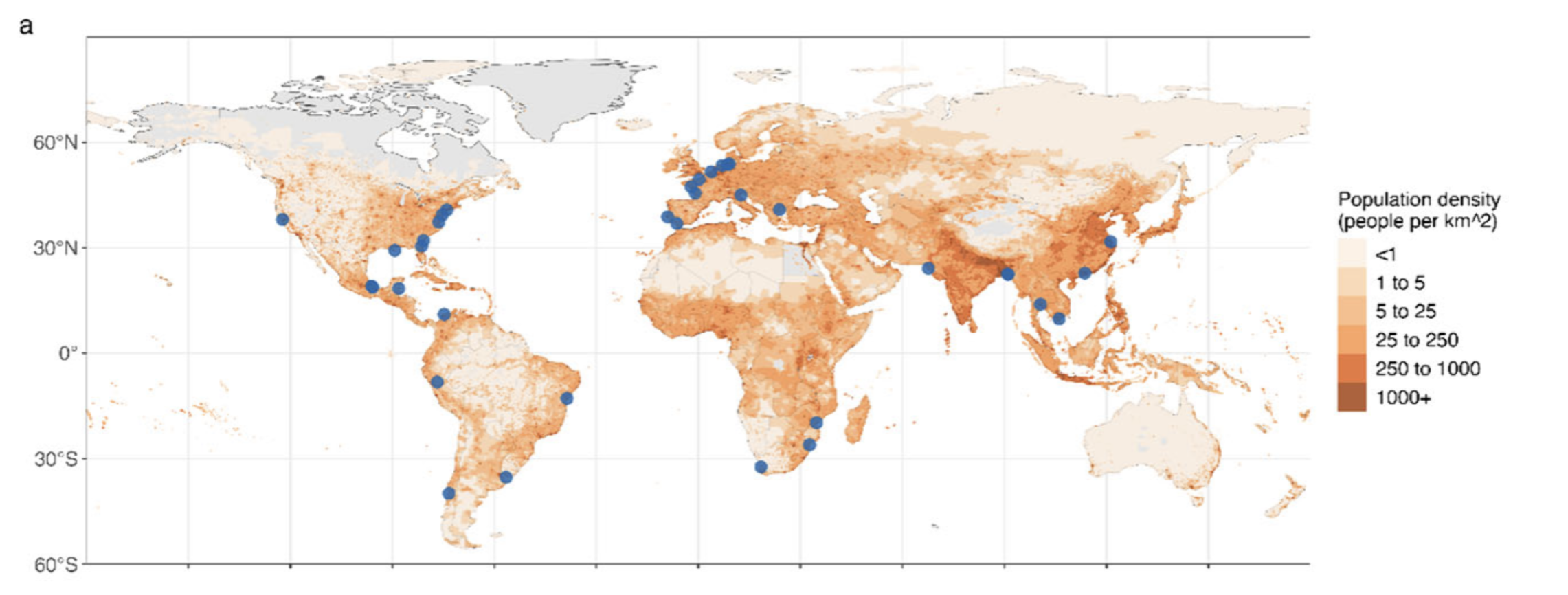
Population Density
Global map of population density (color) and locations of the tidal rivers with reported saltwater contamination issues (blue dots).
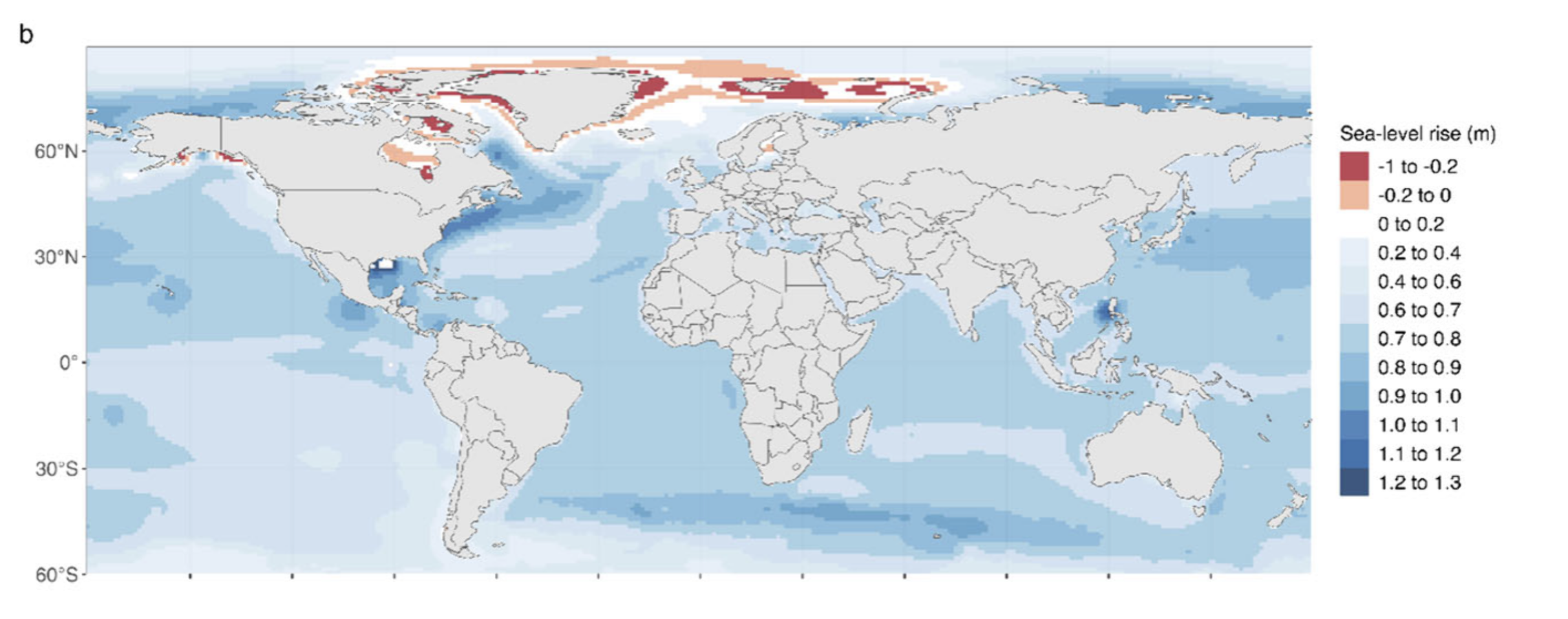
Sea Level Rise
Global maps of the projected median regional relative sea-level change, from 1995−2014 to 2100 averaged across available Coupled Model Intercomparison Project Phase 6 (CMIP6) models in the high emission SSP5-8.5 scenario
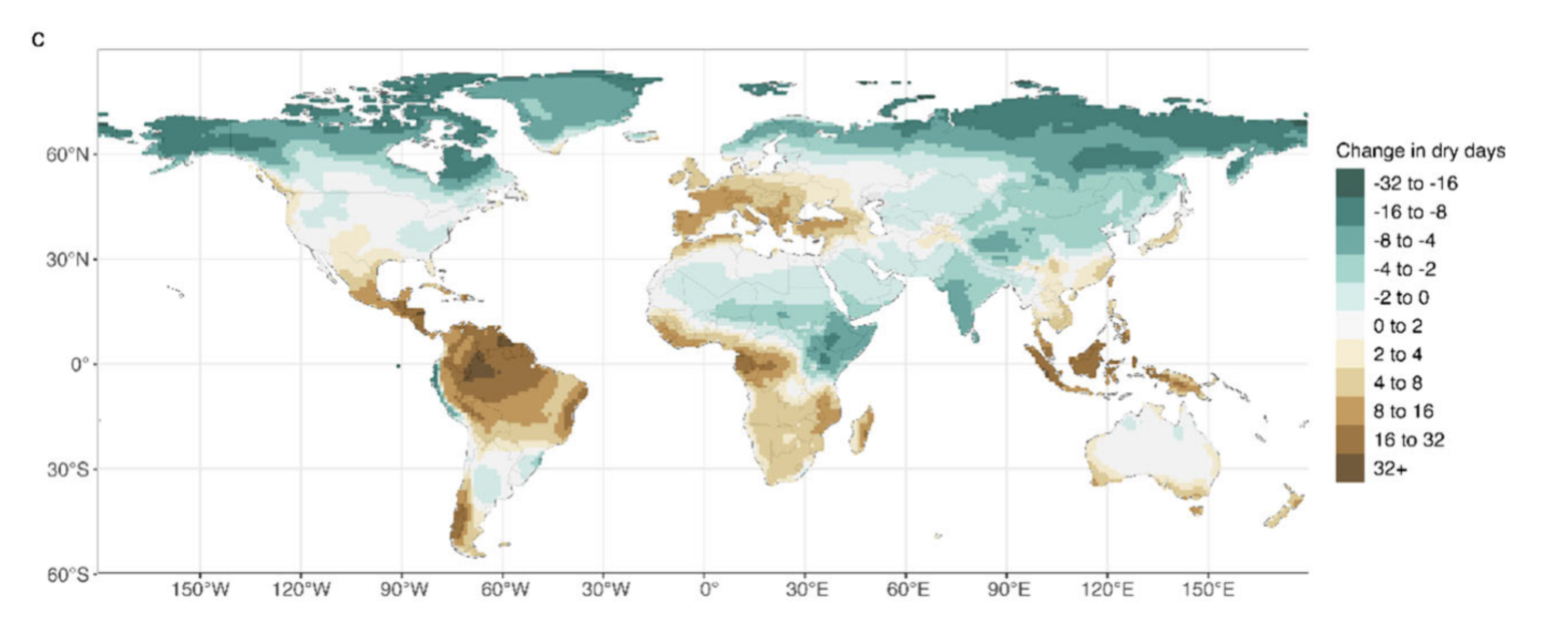
Change in Dry Days
Global maps of the projected seasonal mean relative changes (%) in the number of dry days (ie, days with less than 1 mm of rain) from 1995−2014 to 2100 averaged across available Coupled Model Intercomparison Project Phase 6 (CMIP6) models in the high emission SSP5-8.5 scenario.
However, saltwater intrusion remains poorly understood and insufficiently synthesized across regions. Some of the causes are:
Interplay of River Flow and Ocean Salt Transport
Salt intrusion results from the interplay between river outflow and ocean salt transport, influenced by sea-level rise, tides, storms, ocean changes, and human interventions.
Sea-Level Rise
Sea-level rise intensifies salt intrusion, especially during droughts or low river flow. This trend affects estuaries worldwide, from Europe to Asia and North America.
Ocean Circulation Changes
Changes in ocean circulation can raise coastal sea levels and drive salt intrusion. These effects are linked to phenomena like Gulf Stream weakening and El Niño-related extremes.
Salinity Variations
Variations in the salinity of coastal ocean waters—due to long-term trends or short-term events like upwelling—can significantly influence salt intrusion into estuaries.
Tidal Influences
Tides influence salt intrusion through mixing and dispersion, with seasonal and long-term changes in tidal strength linked to stratification and sea-level rise, as seen in the North Sea and U.S. estuaries.
This SCOR Working Group will collect global case studies of salt intrusion and define best practices for its measurement, modeling, and analysis, with the goal of advancing knowledge and delivering actionable insights. Specifically, it aims to:
Compare case studies worldwide to understand coastal and oceanic drivers of salt intrusion, highlight knowledge gaps, and define research priorities.
Review and compare existing estuarine modeling studies to identify best practices for model setups, including grid resolution and mixing parameters.
Analyze global river–ocean water chemistry data to refine the equation of state for river–seawater mixtures and improve understanding of salinity dynamics.
Analyze site-specific case studies to identify conditions driving salt intrusion across estuary types, and develop a shared GitHub repository for code and tools.
Develop a global overview of salt intrusion in estuaries and tidal rivers, analyzing how river flows, sea-level changes, tides, and winds drive extreme salt contamination of water.
Enhance capacity, share knowledge widely, and transfer essential technical skills, focusing especially on empowering scientists from developing nations.